JANINE HARRISON

Writer, Professor, Teaching Artist, & Arts Advocate
  • Home
  • Books
  • Freelance Writing Services
  • Upcoming Events
  • Blog
  • About
  • Contact
  • Category: Uncategorized

    • Heading to Haiti for Haitian Connection

      Posted at 12:11 pm by Janine Harrison, on July 5, 2017

      031

      Instead of my usual Second (or occasionally third…gulp!) Sunday Scribble, this month, I’ll be blogging either on the road or shortly after my return from Jeremie, Haiti (contingent upon wifi connection), where I’m going to teach a two-day poetry workshop for the not-for-profit organization, Haitian Connection, coordinated by the tireless and wonderful Renate Schneider.

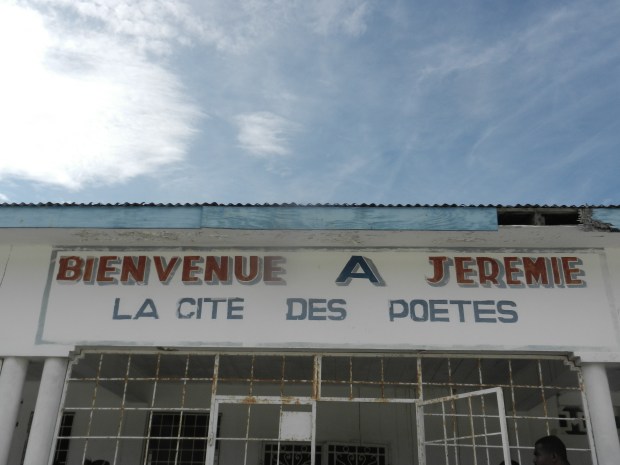
      I am very excited about teaching poetry in Jeremie, “The City of Poets,” in an intimate workshop setting to these young adults. I relish meeting the attendees.  And I already know from last trip, October 2012, when I taught English as a Foreign Language and fiction, that I need to see teaching of the subject through new eyes, eliminating cultural allusions that won’t make sense to this audience and considering their possible frames of reference. Secondly, as this group’s English proficiency levels will likely vary, there may or may not be a translator.

      As much as I’m looking forward to the adventures that these challenges will bring, I am even more eager to meet and hug two students I’ve been mentoring online, Seby and Degraff, and see a student whom I met last trip, Benic, again; he has since become a teacher, himself.

      The fun will begin when I arrive in Port-au-Prince next Monday.  On Tuesday, I’ll then take a small plane to Jeremie in the rural west and start teaching that afternoon.  Please stay tuned!  Anecdotes and photos to follow!


      | 1 Comment
    • 100 Locofo Chaps Political Poetry Books Sent to Trump

      Posted at 3:00 pm by Janine Harrison, on June 25, 2017

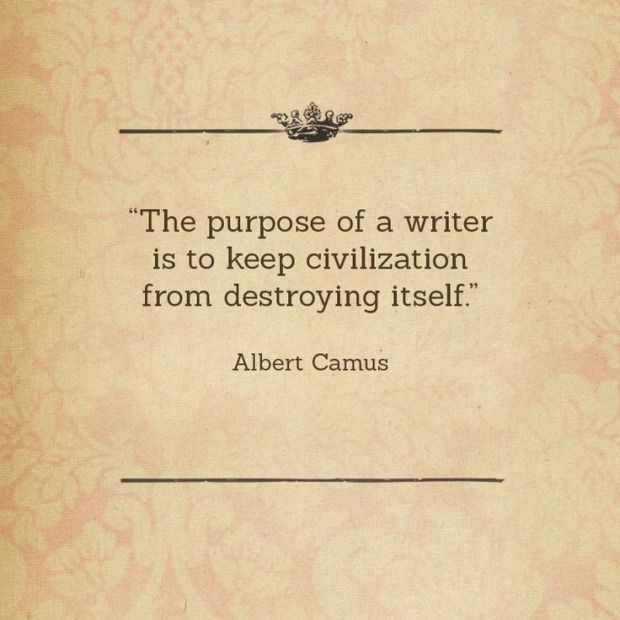
      Camus Quotation

      In January, William Allegrezza, publisher of Moria Books, announced a new imprint, locofo chaps, which focuses on political poetry, and within Donald Trump’s first 100 days of office, he single-handedly undertook a project in which he read, accepted, designed, formatted, published, and mailed 100 protest poetry chapbooks to the White House. Since accomplishing this colossal feat, Allegrezza has continued to accept submissions. The chapbooks are available for free in .pdf form or for purchase in hard copy at http://www.moriapoetry.com/locofo.html and would serve as wonderful resources for resistance efforts and in the college classroom. Eileen R. Tabios wrote an insightful review of the project in Glass: A Journal of Poetry, available at http://www.glass-poetry.com/journal/reviews/tabios-locofo.html  In her article, she states, “Sending the chapbooks to the White House means that locofo chaps is de facto creating literature’s own protest rally.”

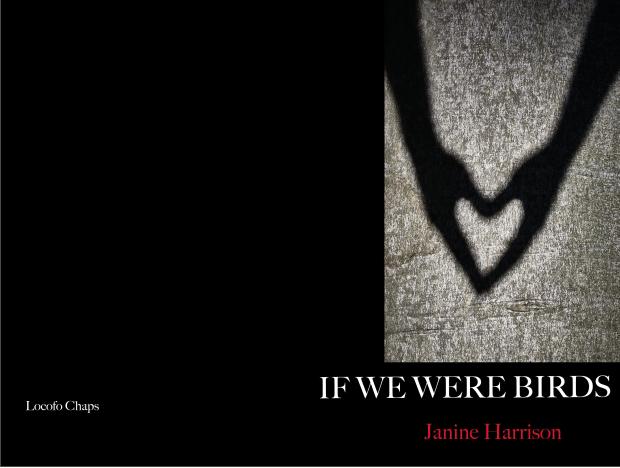
      Writing is a dynamo when it serves as an agent of social betterment, and I am very pleased that my first chapbook, If We Were Birds, was included in the project. The focus of the single poem work is the precarious status that DREAMers (undocumented children who have been raised in the United States) face. While Trump first intended to reverse Obama’s DACA initiative and deport this group of immigrants, he has more recently recanted, choosing, instead, to focus on the deportation of older undocumented immigrants. Even though I am delighted that DREAMers have received a temporary reprieve and will be able to continue to drive and work in the United States, it still does not change the fact that a permanent solution is needed for this population. Any American leader at any time in the future could revoke DACA, leaving DREAMers unable to continue being productive members of our society as well as at risk of deportation. In addition, DACA does not allow DREAMers to have Medicaid or, if they entered the USA without a Visa, to marry, among other limitations. The issue is not being faced by a small number of immigrants either; it affects 1.9 million DACA eligible undocumented young people, over 96,000 of whom have already graduated from college (which they paid for out of pocket). Many DREAMers do not even remember the country in which they were born and were not given a choice as to whether or not to come to America.  They are ours now, are as American as those of us who are citizens, and instead of paying approximately $500 every two years to be allowed limited rights, DREAMers deserve to be given permanent status.

      harrisoncover-page-001

      On Saturday, July 15th, locofo chaps will be hosting a reading.  To hear about the plight of DREAMers and from other activist poets on innumerable timely issues, please come!

      The information is as follows:

      Myopic Bookstore

      1564 North Milwaukee Avenue

      Chicago, IL

      7-8 PM

      | 0 Comments
    • A Different Kind of Con: Losing My ACEN Virginity

      Posted at 12:40 am by Janine Harrison, on May 28, 2017

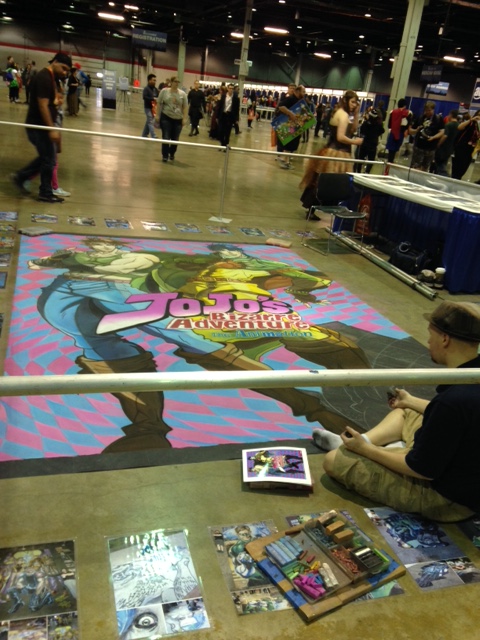
      IMG_5629

      When I think about attending an event that begins with C-O-N, the letters to follow are usually F-E-R-E-N-C-E. But my twelve-year-old old, Jianna, speaks, lives, and breathes anime and manga, so this past weekend we attended a C-O-N-V-E-N-T-I-O-N, namely, Anime Central (ACEN).

      A friend who has been attending the Con for twenty years was concerned that I might experience culture shock, but I usually attend creative writing conferences, so participating in an event with anime and other pop culture characters and furries really wasn’t that much of a stretch!  However, I will admit that the vendor exhibit hall caused a bit of sensory overload for me at first.  Fortunately, a gaming vendor was handing out free bubble wrap to pop for stress relief and free chocolate, so with that winning combination, I was soon good!

      One perspective on this form of entertainment would have to be as symbolic of American privilege and consumerism, with member attendance numbers alone likely above 30,000 and participants as regular patrons of TV and film products leading to the Con as well as fortunate enough to be able to afford registration and often hotel, food, elaborate costumes, and product purchases. However, it is certainly not unique. I recently looked up Bruno Mars concert tickets and saw that the cheapest seats were $167.00.

      That stated, I was amazed by the creativity of many costumes that were crafted by the wearers. Some outfits included crocheted beards and other elements, and both a panel on choosing sewing machines and discussion of “fine stitches” by a costume judge allowed me to see such efforts as a resurgence in art forms with modern-day applications – art forms that may otherwise have died with our grandmothers’ and mothers’ generations. Craftsmanship of accessories or, in one instance, the entire Howl’s Moving Castle (pictured, which won an award), often showed incredible talent as well. And to be fair, some costumes were completely homemade, inexpensively, involving such items as cardboard boxes and tin foil.

      IMG_5616

      I did not enter Anime Central as a stranger to the media. My introduction took place almost twenty years ago, when my niece, Chyanne, and one of her college friends showed me Princess Mononoke. While I was initially taken aback by its violence, I was appreciative of its depth. Since Jianna was little, she and I have watched numerous additional Hayao Miyazaki films together, beginning with Ponyo. In addition to being astounded by the aesthetics of such productions, I also found the inclusion of such themes as parental illness/death admirable; such frank and realistic portrayals were refreshing. Jianna has continued to explore anime films and series on her own, introducing me to a number as she has joined the fandoms.  While I disapprove of the sexual objectification of women that I have witnessed in some works (and Jianna and I have discussed this and why), overall, I’m a fan of the form.

      At the Con, though, my admiration grew, in part because I learned more about what happens behind the scenes. For example, we attended a Yuri on Ice fan panel, and were told that professional costume designers imagine the costumes for the anime cast to wear and professional ice dance choreographers design routines for the ice competitions.

      We also attended a panel on web comic production because Jianna is a budding artist and writer. I was delighted to hear one comic writer and artist tell attendees that they must read heavily and widely, so that the frame of reference they’d gain would inform their web comic creation.  He also stated that if a web comic is written and drawn to the point that it is good enough to “get by,” then it really isn’t finished yet. In other words, he argued for high standards.

      Equally so, in a panel on the female heroic journey in anime, voice actor Crispin Freeman talked about the power of stories to help audiences to reflect on life lessons, and he told panel attendees that if they do not take said lessons back into their realities and apply them, then they are cheating themselves. I felt very good knowing that the presenters were giving such invaluable advice to adolescent and young adult listeners.

      IMG_5647

      At the end of our first day, Jianna said, “The whole world should be an anime con!”

      When I told two twenty-year veteran ACEN attendees that, one replied, “Anime Central is the least judgmental place I’ve ever been.” The other individual added that she doesn’t see anyone as “weird” in everyday life.  Anime Central helps all who attend to move past such restrictive thinking and to accept people for who they are. I could see it. Not only was impressive racial and sexual orientation diversity evident, but Anime Central also consisted of a large age and ability range as well.  Once could say that I was CONvinced (sorry, I couldn’t help myself!)  – which is good considering that Jianna asked, “Can we attend Anime Central next year, and the year after that, and the year after that, and the year…”

      | 1 Comment
    • Poetry Liaison Seeks News, Ideas, and Partnerships

      Posted at 2:28 pm by Janine Harrison, on April 9, 2017

      poetry-book-sign-md

      Happy National Poetry Month! 

      As many of you are already aware, I was selected as the 2017 Highland Poet Laureate (Indiana).  I have a year to foster poetry in my town and surrounding communities, and I would like to make the most of it.  In today’s society, the idea that “poetry is dead” persists, despite the fact that the form is possibly more active and relevant than ever before, and frequently, when I ask my college students in introductory creative writing to name their favorite poet, the response is “Shel Silverstein”; it seems that in the pursuit of quality standardized test scores and with the increased emphasis on STEM, creative thinking and literature are often pushed to the side in education after elementary school.  (Please note that I do not blame teachers for this shift.)

      My goals thus far are as follows:

      1. To show the uninitiated that news of poetry’s death has been greatly exaggerated. To invite people of all ages into the poetry community and illustrate that contemporary poetry is powerful, accessible, and vital
      2. To host poetry workshops for children, adolescents, and adults that introduce and encourage the writing of poetry in its myriad forms
      3. To support poets, particularly those who reside in Indiana, by showcasing their work
      4. And to strengthen Northwest Indiana’s arts community by promoting awareness and poetry events, both stand alone and mixed media

      To these ends, I am asking you, dear readers, to:

      1. Please friend highlandpoetlaureate on Facebook and/or follow @highlandpoet on Twitter

      I will be posting news of local and state poetry events and projects, videos, resource recommendations, links to interviews, reviews, and more on social media.

      1. Email me at highlandpoetlaureate@gmail.com
      • Send news about local poetry happenings that you’d like promoted
      • Send ideas for events and projects that I could possibly assist with or host in Highland
      • Write “Add to Eblast List” in the subject line, and I will add you to the list for announcements of local poetry events
      1. Spread the word about events and projects – please be an advocate!
      1. Attend! Participate!  Having coordinated the IWC’s literary reading series, Stream Line, for two years, I can promise you that I will organize events with these aims in mind:  They are comfortable, accessible, interactive, stimulating, creative, and enjoyable
      1. Share this blog post to help me get the word out!

      Please know that I appreciate any and all efforts on your part, and I look forward to serving Northwest Indiana as a poetry liaison!

      There are a million powerful quotations about poetry in existence, each saying something different about its impetus, purpose, beauty or power.  According to Paul Engle, “Poetry is ordinary language raised to the Nth power. Poetry is boned with ideas, nerved and blooded with emotions, all held together by the delicate, tough skin of words.”  In response, I say, let our words walk, our words dance, our words climb mountains, this year and always!

      | 0 Comments
    • Waving Good-bye to Faulty Practices: For Our Newest Feminists

      Posted at 3:37 pm by Janine Harrison, on March 12, 2017

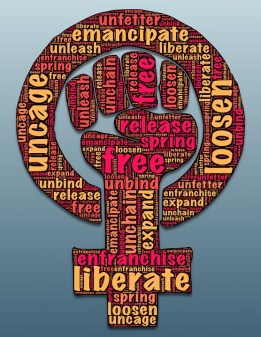
      emancipate-1779119_960_720

      Since the Women’s March on Washington, I’ve seen a new wave of feminism cascade into my composition classrooms with Generation Z females, which has done my heart considerable good since it is certainly still needed.  In recent years, leading up to police brutality coming to the attention of the Fourth Estate and the 2016 presidential election, I was having difficulty convincing many white Generation Y students that we don’t live in a post –ism world, including sexism. My current female students are mainly addressing the gender wage gap, which is only about 79 or 80 cents to every man’s dollar, if you are a white woman, and even more shamefully, less than women on average made in the 1970’s, if you are a woman of color.

      As a female in my late 40’s, post-Women’s March, during Women’s History Month, and as a creative writer who has spent half of her life teaching college, I cannot help but reflect upon where I am and what it says about where we as women are today.

      I like what I am reading in my students’ papers.  One bit of advice is that women need to learn about the salaries of their colleagues, so that they know whether or not they are being discriminated against financially.  I explained to one student writer that historically, etiquette has dictated that one should never ask someone, “How much money do you make?”  Perhaps such etiquette needs to change?  Or better yet, maybe we should demand transparency from our employers.

      Another best practice suggested to women is that we use our voices.  Evidently, most men negotiate their salaries when being hired; the majority of women do not.  I remember being so happy that I was being offered a job and a pittance of a raise as compared to my last position that I would eagerly take it without ever thinking to ask for more money.  If I had, I would surely have conned myself out of it with the thinking, If I ask for more money, perhaps they’ll decide not to hire me and go with the next person on their list – their back-up person.  Even today, as qualified as I am, I’ve gone through life practically having to beg for any type of upward mobility, so the thought of entering a hiring situation having confidence in my worth is daunting, especially now that I am getting older and in an economy that is so competitive and precariously balanced, and especially so in the Liberal Arts.  Life experience has taught me to whisper and now, I will need to retrain myself to assert myself in ways that I haven’t previously.  Not impossible, but certainly not easy.

      Women are encouraged to use our voices on the job as well.  I always thought – must have been taught either directly or indirectly while growing up (perhaps because I was raised by Silent Generation parents?) — that if I worked diligently, made strong contributions, that my work would be recognized and reward would be fairly allotted.  I never bought into “it’s not about what you know, it’s about who you know” or “the squeaky wheel gets the grease.”  However, academia is still largely an “ol’ boys’ club.”  I look at the president, chancellor, and vice-chancellors of my own university, and six out of eight positions are held by white men.  It seems as though they’ve thrown in a token black woman and a token Latina for good measure.  During an informal meeting a few years’ ago, academic and activist Sue Eleuterio told me that she’d learned that a person can only soar as high as their network allows, which is often a problem for minorities, women included.  I’ve always thought that an employee’s work should speak for itself.  However, I’ve begun to see through fresh eyes that women should give voice individually as well as unite, fostering voices collectively, so that we may rise.

      Furthermore, when examining layoffs of non-tenure track academics and lack of conversion of positions from temporary contracts to permanent at my university, the majority of instructors affected have been female.  While the university can undoubtedly show “reasons” for these layoffs, ultimately, the message is clear – the treatment women have received in academia (and maybe even the lives that took the women into non-tenure track directions to begin with) – signal that we are often considered expendable.  I witness and I participate as a woman in a work world where women almost always take on one more responsibility and then one more, one more responsibility, rarely expecting anything additional in return.  And that’s what women get in terms of financial compensation – nada.  It is for such reasons that the life expectancy of women is decreasing.  On March 8th, as one of the “10 Actions in the First 100 Days,” follow-up to the Women’s March, women went on strike.  Had it been a true strike, in academia the university would fall apart within weeks.  My university is a microcosm of the whole in the United States – no worse, no better.  Women need to expect fair compensation for our work and for additional work; we deserve it; we need to squeak to be recognized at the table.

      Don’t get me wrong.  I am not a coal miner.  I don’t pick burnt Frosted Flakes off of a conveyor belt for eight hours per day to make a living.  As both an academic and writer, I perform work that I find extremely gratifying; otherwise, I wouldn’t do it.  I never went into the discipline that I chose to get rich. However, as I approach what is supposed to be the “peak” of my earning potential, in a job that pays me what would be considered an entry-level salary in other fields and with a downturn in recent years out of nowhere that has led to no security, I cannot help but feel a bit depressed, hurt, and well, cheated.  I am writing this blog for my younger sisters – the Y’s and the Z’s – because social change is again imbuing the air, and I want better for you than socialization within patriarchy or than I have allowed for myself to date.  My 12-year-old daughter, Jianna, recently said, “I think that I’ll become an artist now and president of the United States later on.”  I want it for her.


      | 1 Comment
    • Writers as Dense Forest of Activism and Love

      Posted at 2:00 pm by Janine Harrison, on February 12, 2017

      img_5300

      Powerful is the best word that I can think of to describe the 2017 AWP (Association of Writers and Writing Programs) conference in Washington, D.C.  Needed also comes to mind.

      Highlights:

      Keynote Address

      Azar Nafisi, an Iranian writer who became an American citizen in 2008, and is the critically-acclaimed author of Reading Lolita in Tehran and other works, a Johns Hopkin professor, and journalist, gave the keynote speech.

      She said that in America, we are suffering from a crisis of vision, faith, and values – that the crisis isn’t political, it’s existential – it is about our identity.

      The poet and tyrant, she explained, have always been rivals over the truth; the tyrant fabricates reality, whereas the poet reveals it.  With tyranny in Iran, women, other minorities, and culture were targeted first.  She added, “Does this ring a bell?”  Today’s problem, then, she continued, is, in part, that of one voice becoming everyone’s voice, which writers must prevent.  Literature is about learning about the other.

      She reminded us that as James Baldwin stated, to disturb the peace is the writer’s role.


      Panel:  “Agents of Change:  Social Justice and Activism in the Literary Community”

      This panel helped me to form important questions:

      1. How do we amplify?  How do we go from social media activism, letter writing, and petition signing to louder forms of protest?  We do not want to use the tactics being employed by the Trump administration and supporters.  How do we fight on our own terrain?
      2. How do we make attention to issues that matter, such as those involving people of color and other minority groups, sustainable? (Instead of mainly focusing on them just after an event has occurred that requires response.)
      3. How do we build bridges and to whom? Do we focus on the young?  Those who did not vote?  What strategies do we employ to get people to engage in necessary conversations?  How do we find a way to lower the tension instead of continuing to raise it?


      Readings

      Danez Smith, when asked how he survives, replied, “I survive by remembering sitting on the porch with my grandmother.”  He remembers the beauty – to write those details about life.  He said that the reason he writes about the issues that are faced by our country is out of love.

      There were many moving readings.  The names James Baldwin, Adrienne Rich, and Frederick Douglass, among others, were often evoked.  “Love” was a word that I heard repeatedly recited in poetry.


      Candlelight Vigil for Freedom of Expression

      Several phenomenal writers spoke, including a writer who almost could not make it to the AWP due to Trump’s travel ban, and explained about having to go to Mumbai for her Visa.  She said to imagine the people who had been waiting for years to come to the United States, the refugees, only to be told to turn back, to go home, when no home awaited.  The woman she sat next to on the plane spoke no English and could not order a meal or fill out a form without assistance.  She hadn’t seen her daughter in ten years, so when the ban was frozen, she purchased yet another expensive ticket in an effort to reach her daughter as soon as possible, before the travel situation could again change.

      Another writer, a transgender queer person of color who was an immigrant, talked about the United States and being able to dream that someday a transgender person could be president and being unwilling to give up that dream.

      Ross Gay closed the vigil with a beautiful metaphor.  Evidently, trees are able to communicate through their root systems.  If one tree is low on a nutrient, it can let another tree know, and if that other tree has a surplus, it is able to send the nutrient to the tree in need.  It reminded me very much of how my mom described the Great Depression:  “If a neighbor’s baby was in need of milk and we had it, we would give it to them and vice versa.”  She lamented how the world had changed – how she felt that would no longer hold true. Ross Gay, however, made it clear that we writers are the trees, that we need each other now, more than ever.

      When the AWP began, I thought ahhh…I’m with my tribe.  But I leave D.C. today, thinking, ahh…I’m with my trees!

      | 0 Comments
    • #WhyIMarch

      Posted at 2:56 pm by Janine Harrison, on January 25, 2017

      Three Days After the March

      fullsizerender3          fullsizerender

      No hate, no fear — everyone is welcome here!

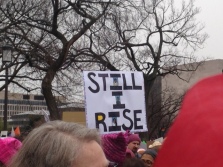
      The Women’s March on Washington was exactly as I had hoped.  From women in wheelchairs being pushed by younger women to preschool-aged children, female and male alike, on their mothers’ shoulders, we chanted as we stood, chanted as we marched.  We were all skin colors and one.

      img_5117

      Jianna with her protest sign, which read, “Promote Peace.”

      We stormed D.C. with love.  Even though over 500,000 females and male allies were in attendance, not a single act of violence took place.  Marchers yelled Curb! and Divot! so that everyone stayed safe. Marchers walked up to my daughter, Jianna, and said, “Beautiful sign!”  Two or three took photos of her with it.  One dusted her with glitter afterward.  In fact, the only aggression that took place was in the form of Boo! and finger flipping in front of Trump’s International Hotel.  D.C. opened up her churches and businesses to Marchers — Get warm!  Use the bathroom!  Have some cookies and lemonade! 

      16178806_10206826351491917_502661707522551977_o

      Our bodies, our choice!

      We were a pink army in pussyhat uniform.  Pussyhats sewn with love.  Sewn at houses across the country and mailed, sewn on planes to the march, sewn in stations while awaiting trains to D.C.  Pussyhats symbolizing as many causes as their were yarn shades and hat designs.

      (A special thank you to my student and friend, Jennifer Stockton, for making the three pictured above, which not only served us well symbolically but also kept our ears warm!)

      fullsizerender2          img_5121

      Black lives matter!

      After the March, Jianna and I walked to the Split This Rock Poetry of Resistance Open Mic, and a black male in his late teens was behind us on the sidewalk.  At first, I didn’t realize that he was speaking to us.  Then, I heard him say, This is the closest we’ve ever been.  Because we all hate Trump!  I gave my protest sign a little shake and agreed.

      We abhor the polarization that Trump’s win has made apparent — the progress toward valuing people of all races, ethnicities, and religions that we thought was being made, that, in many cases, has not manifested.  Hopefully, the inclusive Women’s March, not just in D.C. but internationally, has helped Americans who are black, Mexican (legal and undocumented), Muslim, LGBTQ+, and other groups much more vulnerable than white women such as myself, as well as women across the world, to feel less alone, frightened, and hated, and to understand that we won’t tolerate ideological backslide or related practices of discrimination.

      What does democracy look like? 

      The Women’s March re-energized us.  It gave us hope for the first time since that fateful date, 11/9.

      At the Split This Rock event, for the first time ever, I heard co-founder and Director Sarah Browning utter the words, “Poetry is not enough.”  She said that we must be on our telephones with representatives daily and take other actions to make our voices heard.

      The March was only the beginning.  For the follow up, please see the Women’s March on Washington, “10 Actions, 100 Days”:  https://www.womensmarch.com/100/And if time and spirit permit, please do more — as good global citizens.  Why?  Because:

      This is what democracy looks like!


      | 4 Comments
    • #WhyIMarch

      Posted at 3:04 am by Janine Harrison, on January 20, 2017

      Two Days Before the March

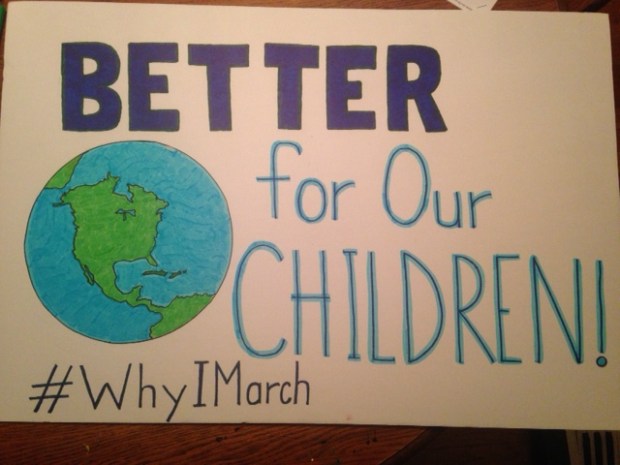
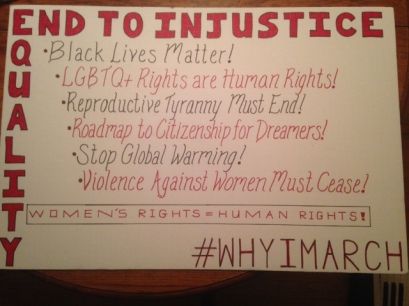
      Politicians, the media, and attendees will be much more easily able to read this side of my protest sign at the Women’s March on Washington.  While it contains nothing clever like a sign that I saw posted on Pinterest last week:  “Girls Just Wanna Have Fundamental Rights,” it states what I most desire.

      img_5079

      In my personal life, as a Generation Xer, I have been mentally, emotionally, physically, and sexually abused my men (my husband excluded, thank goodness!); in my professional life, I have experienced sexual harassment, pay discrimination, and ol’ boys’ club mentalities.  I am hardly alone.  Is it really so much to ask that Generations Y and Z, that my tween Z daughter, Jianna, not be subjected to such life-altering experiences?  That the generations of females in young adulthood and being raised now and in the future live in an environment in which they are treated respectfully and justly as well as have the chance to receive equal pay and opportunities at work?  Why is something so simple so difficult to attain for females around the world?

      | 0 Comments
    • #WhyIMarch

      Posted at 1:51 pm by Janine Harrison, on January 18, 2017

      img_5078

      Four Days Before the Women’s March on Washington

      I wrote too much on my protest sign, of course.  It was the “#WhyIMarch” that did it to me.  I described my attempts to formulate a succinctly worded sign to my best friend, Jackie, who is also attending, as “Trying to fit Stephen King’s entire The Stand series on a grain of sand.”  I wondered, What’s the page limit on a protest sign?  Fortunately, my sign has two sides, and I used better restraint on the second one.  I mentioned my lack of brevity to a class, and one student, Jennifer, who knows me well and was not at all surprised, said, “You need one of those giant sticky note flip pads.”  As I finished coloring in letters on my sign tonight, I imagined sticky noting D.C. and in the process, walking up to Donald Trump and sticky noting him, adhesive strip placed firmly across his big mouth. 

      What I didn’t realize was that the mere act of making my sign would be cathartic.  I could actually give voice to my anger simply by penciling the words on foam board.  Admittedly, I have been angry for a long time, but not with the intensity that I feel in relation to Trump’s misogyny and the history and current views of his incoming administration.  I didn’t realize how much I needed this release.  If this simple act is one of empowerment, I wonder how protesting with over 100,000 of my sisters (and supportive brothers) will feel on Saturday?  I can’t wait to find out!  Before it closed, I used to go to a lesbian bar, The Patch, in Calumet City, Illinois, as a straight ally.  A sense of sisterhood permeated the place, such as I’d never known outside of it.  I anticipate feeling that again on Saturday, only with much greater intensity due to the focused energy of the marchers.  The thought brings tears to my eyes.  And I am grateful that my tween daughter, Jianna, will have the experience and be able to see women, the power of women, through new eyes.

      | 1 Comment
    • Activism: Transitioning from Reactive to Proactive

      Posted at 3:15 pm by Janine Harrison, on January 8, 2017

      reactivism

      After the November 8th election, I pretty quickly went from numb to furious and determined, vowing to quadruple my activism for the foreseeable future.  Soon, I became a petition-signing, representative-voicemail-leaving, emailing machine!  I am activist , hear me roar!

      My niece, Chyanne, is also an activist.  Last month, on Facebook and in person, we discussed making the transition from reactive to proactive activism.  In the past, we’d both mainly reacted to situations in need of our attention.  However, we agreed that a systematic approach was needed.  As professional women, we, after all, have limited time and resources, including ourselves, so it is essential that we be wise about our approach – to give smarter, not harder, if you will.  What follows are tips for approaching activism effectively, based upon our individual mulling and subsequent conversations:

      1. Develop a Tiered System of Priorities

      What issues do you deem as most important?  Perhaps develop a tiered system of priorities.  The top level could include issues that you are willing to devote time, energy, and money to via volunteerism, promotion, and giving.  A second level could entail issues that hold enough significance for you to complete “armchair activism” – activities that may be completed conveniently via technology.


      1. Research Organizations and Government Contacts

      Do you know what organizations advocate for issues about which you are concerned?  Do you have your local as well as national government contact information handy?  If not, perhaps create a document with that information, so that it is ready when needed.


      1. Develop an Activism Calendar

      Are there specific causes that you support that coincide with certain months, days of the year, or events that make advocacy during those times a logical match?  Chyanne planned to rotate her donations from month to month, which I now plan to do as well.  I printed out a free monthly calendar template for 2017 to use just for activism, so that I may stay organized (always a struggle!).


      1. Make a “Change for Social Change Jar”

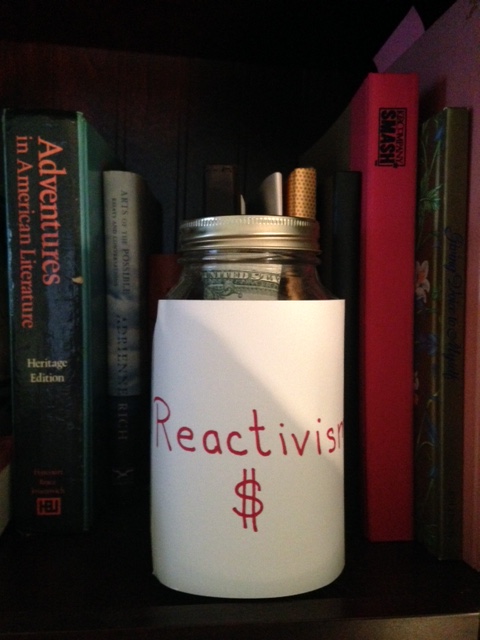
      No matter how well we plan, there are always issues that arise that demand our immediate attention.  In response, my family has begun putting our spare change in a “Reactivism Jar” (pictured above), so that when those particular rainy days are upon us (and I fear that we’re in for a rainy season that may last four years!), we are ready to contribute.


      1. Use Social Media to Encourage Others to Follow Your Lead

      I have never been very good at clicking the “Now that you’ve signed this petition, share on Facebook, Twitter, etc.” links on online petitions and donation sites, but I intend to change that because when others post something of a similar nature on Facebook, I often open, act, and share.  So, why not take that extra step and encourage advocacy in others whenever possible?

      On New Year’s Eve, my niece posted the following on Facebook:

      Action Plan for 2017:

      January_Political Reform
      February_Hunger/Homeless
      March_Women’s Rights
      April_Environment
      May_Arts
      June_Equality
      July_Urban Farming
      August_Architecture
      September_Mental Health
      October_Alternate Energy
      November_Vets
      December_Religious Equality

      The most positive thing I have seen come out of this election has been the outpouring of support and action for agencies and causes. I want to support them all! However, I’ve been personally pulled in too many directions. My attempted solution is to focus on a particular issue or umbrella issue for each month of 2017. I will donate my monthly contributions to causes related to that issue and I will use my extra time to volunteer for agencies in need. I will make phone calls to legislators and governing bodies on their behalf and try to focus my attention each month.

      I invite you to join me on this journey. I’m open to ideas and might need to make some adjustments to this calendar. I plan to announce the cause throughout the months and provide opportunities for conversation and action.

      Is there anything I’ve missed – or any charities/agencies that you would recommend supporting under these umbrellas? Please comment!

      Have a wonderful New Year!

      Chyanne has inspired me to make similar announcements on Facebook.  I will try to use tags as well to help draw increased traffic and attention to causes and organizations in need, such as Planned Parenthood.

      Please note that I am not pretending to be an expert  – just someone who wants to better maximize small contributions toward making the world a more humane dwelling place.  Do you have additional tips?  If so, please leave them in the Comments section below.  I’d love for this to become a dialogue! 

      Whether you are female or male, I hope to see you at the Women’s March on Washington on January 21st!  I’m bringing my eleven-year-old daughter, Jianna; hopefully such experiences will help motivate her to get a much earlier start as a concerned global citizen than I had!


      | 3 Comments
    ← Older posts
    Newer posts →
    • Recent Posts

      • Week 1: Hurry Up & Relax!
      • Ranch Sweet Ranch: The Start of My First Artist in Residence
      • In Honor of the National Weekend of Action: My Evolution from Pro-Life to Pro-Choice
      • “Cursed” Island? An Update on Haiti
      • Each Voice a Stride
    • Categories

      • Uncategorized (44)

Blog at WordPress.com.

JANINE HARRISON
Blog at WordPress.com.
  • Subscribe Subscribed
    • JANINE HARRISON
    • Join 38 other subscribers
    • Already have a WordPress.com account? Log in now.
    • JANINE HARRISON
    • Subscribe Subscribed
    • Sign up
    • Log in
    • Report this content
    • View site in Reader
    • Manage subscriptions
    • Collapse this bar
 

Loading Comments...