JANINE HARRISON

Writer, Professor, Teaching Artist, & Arts Advocate
  • Home
  • Books
  • Freelance Writing Services
  • Upcoming Events
  • Blog
  • About
  • Contact
  • Category: Uncategorized

    • Take Heart: Listen to a Millennial Today

      Posted at 1:22 pm by Janine Harrison, on December 11, 2016

      millennials

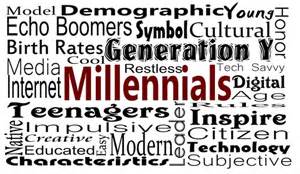
      One reason that I have loved instructing college English for over two decades is because I relish getting to know the students and hearing about their lives.  When I first began to teach, I was only a few years older than the bouncing baby freshmen and younger than most non-traditional students.  Then, I felt a kinship with the 18-to-22 year olds.  In more recent years, however, I have gone from teaching students from my generation, X, to teaching Millennials.  At first, the students were so on the cusp of the two generations that the difference was indiscernible; in the last few years, though, that has changed.  I am getting older and am feeling the generation gap.  While I grieve the increased sense of disconnect, such as when the students don’t understand my pop cultural references or were born after or toddled through a period of “history” that I remember clearly or I own a clothing item that pre-dates their existence, I, at the same time, appreciate that our learning experience together is still bilateral.  Among other lessons, today’s young adults teach me that even though change is perhaps the slowest animal ever created, there is still good reason to hope for a better tomorrow.  As we become increasingly immersed in the holiday season, I thought that it might be warming to share some of my observations and experiences from this Fall 2016 semester.  In addition, I have always felt that generations are labeled too early.  I say this as a member of the generation originally known for its slacking and desire for immediate gratification –so Millennials, I am sending early good press your way!

      In English composition over the past few years, several students per term have chosen to address the pervasive problem of police brutality.  In first-semester composition at Purdue University Northwest, where I teach, in one assignment, students are required to write about an issue from three perspectives in an informative manner.  They often find it difficult to remain objective and feel the urge to take a position and argue it.  This semester was no different.  I had three students in one class alone pick the subject; however, one student in particular, a traditional-age, African-American male, wrote about police brutality in such a way that he was so fair to all parties involved, so empathetic toward the experiences of police officers, that I was dumbfounded by his ability to be, considering that he stated that as a young black man, he would be “afraid to be pulled over by the police.”  Later in his paper, he maintained that the United States is “too amazing” to go backward, and that we, as a society, need to “join arms” to solve this issue and others, together.  When I conferenced with him over his rough draft, I told him that considering the racism that was made obvious by the U.S. presidential election results and in the form of increased hate crimes from the elementary school-level to adult since November 8th, I felt heartened that he could be as optimistic as he is about America and if he could have such a positive attitude regarding our society, perhaps I could too.  I actually thanked him for his uplifting words.

      I also taught a transgender student, an undocumented immigrant enrolled through DACA, and a Muslim student who wears a head scarf.  When I was a child, my parents strongly encouraged me to temper my insatiable curiosity with politeness, so often times, I have relied greatly on observation, reading students’ writings, reading literature – the educator of the soul, and outside research to inform my perspectives about people, issues – the world.  In these instances, however, for sundry reasons, I asked the students questions.  All three were happy to engage in frank discussion with me.  My Muslim student, whom I’ve known for almost three years, and I discussed her head scarf.  I was saddened to learn that some of her friends had decided to take their scarves off after the presidential election out of fear of hate crimes.  She, though, has not.  After our conversation, she said, “Ask whatever questions you want.  I wish that more people would.” The other two individuals were equally as welcoming and forthcoming.

      Millennials, it seems, have grown up more informed about today’s societal issues than generations past.  With different influences, access to the Internet, increased emphasis on such values as cooperation and volunteerism, and due to factors such as their generation being the most affected by divorce to date, growing up during the Great Recession, knowing mostly a post-9/11 world, and one in which mass shootings have become commonplace, they seem more focused, adamant, and savvy in their approach toward solving problems than previous ones.  I have eighteen-year-old males who honor their fathers, advocate for equal pay for women, and want to see an end to domestic abuse.  I have eighteen-year-old females who advocate for use of Fair Trade products, to save endangered bees, and to stop seeing breastfeeding in public as inappropriate. I have white students, male and female, who feel “rainbow on the inside,” acknowledge privilege, and desire a world in which all races are equal.  And I applaud these Millennials and look forward to when they are leading the USA and make the world a better place for their children (my grandchildren? Gulp…) in a post-Trump era.

      This holiday season, let us remember to celebrate the young people who have so much to offer our todays and tomorrows!

       milenials_3

      | 1 Comment
    • The Aftermath

      Posted at 12:01 pm by Janine Harrison, on November 13, 2016

      694940094001_4752585266001_65f6422c-db70-463a-85c2-b3b21eb21b70

      Hurricane Donald devastated the United States by becoming president elect on November 8th.

      Hurricane Donald has mainly blown hot air so far.  We in the U.S.A. have sturdy structures that may withstand such wind.  We have an abundance of blessings that we should be thankful for daily.  Still, following the election, I felt the same way as I did on the day after 9/11.  Vulnerable.  Fearful for the future.  As though I wanted to curl into a ball and hide under a blanket for the day (or perhaps the next four years!).  As though everything that I believe in and desire for America had been crumpled into a ball and handed back to me by all that Trump represents, with a fleer and a snicker to boot.

      Trump proponents on social media have said essentially everything from “get over it” and “be a gracious loser” to “we love you – let’s work together.”  While what they don’t seem to understand is that it isn’t about losing a race, it’s about losing ground toward an ideology that could make the world an increasingly more just place, and that on Thursday, I walked into a class only to be greeted by a student who said, “Welcome to the end of the world,” they are right in that we need to work together.  We need to cooperate so that the country that so many of us love does not tear itself in half, Civil War-style.

      What I have heard reported in the past several days, however, has not been encouraging:  KKK celebrating the Trump victory, use of the “n” word and graffiti that is blatantly racist against African-Americans, the beating of a homosexual man, and swastika graffiti; it is as though the Trump win were a permission slip for those who hate to come out of their closets and host a nationwide after-party that is in the same spirit as Roman gladiatorial combat or public hangings.  While I realize that not everyone who voted for Trump is racist, homophobic, and misogynistic, I read something on Facebook that resonated with me and that I shared:  “Not everyone who voted for Trump is a racist and/or a sexist, but they did decide that racism and sexism were not deal breakers.”

      And I will say proudly that I plan to wear a symbolic safety pin in the days to come.  I will sign every petition that I read that either encourages the Electoral College to vote Hillary Clinton into office on December 19th or that helps to protect women, blacks, undocumented immigrants, Muslims, the LGBT community, and any other group that is not white male and is already being made vulnerable by the seemingly impending rise of the Trump administration.  I will quadruple my efforts as a writer who believes in writing as an agent of social change and as an grassroots activist to protect the most vulnerable, my family – my 11 year-old-daughter’s future, and myself.

      At the same time, like so many other individuals, I was stunned to realize that the United States is really as divided, as broken, as it is.  No matter what the next four years bring, I will also work to help start healing our nation.  I am hurt and irate that such hatred has gained a powerful voice.  I thought that we were better than this, beyond this.  Instead, I feel as though I’ve returned to being a child in my homogeneous white bread hometown where I learned racist phrases for everyday use before I ever knew what racism meant, and that causes me deep sorrow.  If I feel this way, as a white woman, I can only begin to imagine how those who have been marginalized, victimized – brutalized — throughout our society’s history feel right now.  I wish that we were all at a big bar, crying into our glasses, and that I could tell each of you, “I’m so sorry,” with my hand placed gently upon your shoulder.

      Like so many others, I wonder how we may bridge such a chasm.

      Over the past few days, I have been reminded of a couple of writers that I’ve taught in years’ past.  The first one wrote a narrative essay about being a white man who grew up in the working class and became disgruntled with layoffs and his and other blue-collar workers’ lowly place in society.  He joined and rose the ranks to become a leader in the KKK.  Then, something happened involving a black woman that served as a catalyst for change, and he began to understand that it wasn’t racial differences that were the problem, it was social class division.  He quit the KKK and over the years, he became a much more open-minded man who worked in an educated way toward betterment for all people, instead of in ignorance toward violence and destruction.  It was a read that has always reminded me that people, no matter who they are or what their past, are capable of change.

      The second writer is Naomi Shihab Nye, who is a Palestinian-American poet, novelist, and song writer.  In her work, about turmoil between Middle Eastern countries and between the Middle East and the United States after 9/11, she tries to build bridges, so that people may focus on commonalities, instead of differences, and to show that violence hurts everyone and serves no one.  I hope that in the coming days we will be able to remember and employ such lessons and do so respectfully.

      Hurricane Donald has not destroyed America.  He has, however, shown us that we have considerably more work to do than we’d thought.  We need to re-frame this development as an opportunity to solve deep-seeded issues, opening the lines of communication, listening, and learning from one another.  Instead of “rebuilding,” we need to admit that we hadn’t built the types of roads and bridges that we thought we’d constructed in the first place.  And start.

      | 1 Comment
    • Giving Back to “the Community”

      Posted at 3:24 pm by Janine Harrison, on October 9, 2016

      5203b298aa5d4-image

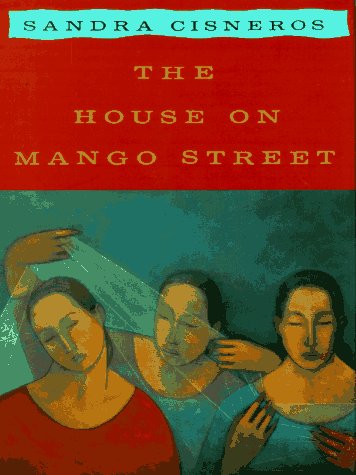
      This summer, I picked up my second copy of Sandra Cisneros’ The House on Mango Street at a library book sale and opened it almost as soon as I returned home.  After a twenty-year hiatus between readings, I found that I had an even greater understanding and appreciation of the poetic novel this time around.  An important idea in the work is that of those who gain voice, gain footing in this world, those such as writers, coming back to their place of origin to help those who have not – in other words, giving back to the community.  The author’s words made me analyze the phrase “the community” and how I, myself, give back.

      I first realized that I don’t give back to “my” community, per se, outside, perhaps, of being supportive of childhood friends with whom I am connected on social media.  Although the Chicagoland suburb in which I was raised was Mayberry-esque, it was also narrow and stifling, and one that I left without strong ties and without looking back.  Sad but true.

      I began to ponder the ways in which we gain communities as life progresses.  I give back to physical communities in Northwest Indiana, where I now live, based upon personal and professional experiences.  One such city, I give to whenever possible because one of my daughter’s grandmothers resides there, a community that I’ve grown attached to over the decades, that is in need.  I give back to other local cities and towns because I teach and live either in them or nearby.

      Giving back to “the community,” can be more than giving to a general population in a physical space, though.  I also give back to Indiana’s literary arts community because reading and writing are passions of mine, and I will attempt to foster the love and development of these entwined activities in as many ways and for as long as I am able; reading and writing can change lives for the better.  In the process, I have also begun interacting with leaders of local not-for-profit organizations and businesses in the visual and performing arts, and now, I advocate for these forms and establishments as well.  Artists should not be wholly defined by their own genre and place therein or territorial of it.  The more that artists in literary, visual, musical, and performing genres support the community as a whole, the stronger it will become.  Synergy, after all.

      Sometimes developing a community that an individual wants to dedicate his or her time and talents to involves an introduction to an unfamiliar culture.  As a college student, I became a feminist, and as the years go by, I advocate increasingly for related causes, such as protection of reproductive rights and prevention and reduction of oppression in its myriad of practices.

      As an English professor, I was given an opportunity to teach English as a Second Language in Jeremie, Haiti – and I was so affected by what I had witnessed in the most impoverished country in the world that a year later I began to write a poetry collection, Weight of Silence, about its tragic history and current sociopolitical circumstances, with the intention of making a donation to the university (UNOGA) and a not-for-profit organization, Haitian Connection, with the proceeds.  Now, with Hurricane Matthew having destroyed over 80 percent of the city’s infrastructure, I am anxious to redouble my efforts to publish the work and donate 100 percent of the proceeds.  Teaching abroad made me feel more committed as a member of our global community than ever before.

      I know many people who give back to more communities, in more ways and with greater zeal and talent than I ever will.  It isn’t a competition, though; everyone does what they can as they become increasingly able.  A millionaire once handed a check for $5,000 to my mom to be applied toward my college education.  My dad was dead, and he knew that my mom was struggling.  He said, “Tell Janine that when her ship comes to shore, to help others still at sea.”  It was my first exposure to the idea of paying it forward.  Giving back is a process – a lifelong process.  Perhaps “the community,” should be used in plural form, as in “giving back to the communities”?  Giving back, after all, is more like the formation of concentric circles of communities building ever outward.  At the same time, narrowing is also necessary.  I am reminded of the words of the late U.S. Senator Paul H. Douglas:  “When I was young, I wanted to save the world. In my middle years, I would have been content to save my country. Now, I just want to save the dunes.”

      I wonder – how do you define “communities”?  Upon reflection of your journey, what have you learned and where do you see it taking you?

      Please share your insights in the comments section below.  Thanks for reading!


      In upcoming blogs, I will address the following ideas and much more!

      • How best to help Jeremie, Haiti, in the wake of Hurricane Matthew
      • The adjunct crisis
      • Creative writers in academia, past, present, and future
      • All things writing
      • Book recommendations, both adult and YA (Guest blogger, my tween daughter, Jianna, may cover YA)
      • Indiana’s creative writing community
      • The challenges and advantages of being a writing couple
      • Reflections on motherhood


      | 0 Comments
    • Sunday Scribble

      Posted at 1:48 am by Janine Harrison, on June 11, 2016

      Hello  ~

      Thank you for opening “Sunday Scribble”!

      As a writer, reader, literary citizen, educator, woman, mother, traveler, global community member — human — I plan to post about topics that have caused pause for thought, consternation, awe, anger, hope or all of the above, and it is my desire that you leave the reading experiences with substantial take aways.  I may not have all or even half of the answers, but I hope that I will at least be pondering the questions that need to be asked to make the world a more humane dwelling place.

      Please know that I will always welcome intellectual exchange.  It is my intention to add voices to timely conversations.

      Looking forward,

      Janine

      | 0 Comments
    Newer posts →
    • Recent Posts

      • Week 1: Hurry Up & Relax!
      • Ranch Sweet Ranch: The Start of My First Artist in Residence
      • In Honor of the National Weekend of Action: My Evolution from Pro-Life to Pro-Choice
      • “Cursed” Island? An Update on Haiti
      • Each Voice a Stride
    • Categories

      • Uncategorized (44)

Blog at WordPress.com.

  • Subscribe Subscribed
    • JANINE HARRISON
    • Join 38 other subscribers
    • Already have a WordPress.com account? Log in now.
    • JANINE HARRISON
    • Subscribe Subscribed
    • Sign up
    • Log in
    • Report this content
    • View site in Reader
    • Manage subscriptions
    • Collapse this bar
 

Loading Comments...